
Volume 9: Issue 2, July–December, 2017

Table of Contents
- Big Data and the Perceived Expectations Gap in Digital Authentication Processes
- Detecting Fraud Using Validated and Specifically-identified Metrics
- Auditor Tenure and Financial Reporting Fraud: Have the Relations Changed Post Sarbanes-Oxley Act of 2002?
- Benford’s Law and Earnings Management Detection: The Case of REITs
- Do Significant Stock Price Drops Signal Red Flag for Financial Statement Fraud?
- Number Generation Patterns Associated with Innate Characteristics
- The Proof of Cash Should be King Among Forensic Auditing Techniques
- Forensic Accounting Procedures Applied to Valeant: Where Were the Gatekeepers?
- An Analysis of Tax Evasion Drivers in Light of the Richard Hatch Tax Evasion Saga
- The Saga of Huber v. the American Accounting Association: Forensic Accounting and the Law
- What is Your Forensic Accounting IQ in the Healthcare Industry?
- Book Reviews
Big Data and the Perceived Expectations Gap in Digital Authentication Processes | Full Article (PDF)
Thomas G. Calderon
Colin G. Onita
Abstract: Perceptions of the security and efficacy of technological innovations significantly affect behavioral intentions and the eventual diffusion of such innovations in organizations and the broader society. This paper uses Twitter as a data source and a big data analysis tool to investigate the public’s perceptions of current authentication methods in financial institutions. This data source has not been used previously in the literature to examine perceptions of authentication methods. We focus on the financial sector because of its high vulnerability, the extensive use of information technology in both products and value chain (i.e., its high business information intensity), and the widespread use of online financial services by both businesses and individuals across geographic and political boundaries. Further, while cybercrime affects all industries, the global financial services industry is hit the hardest. Our investigation finds that the public perceives authentication based on tokens and other possessions more positively than either passwords or biometrics. We also uncovered an expectation gap in the perceptions about the efficiency and effectiveness of different authentication methods. The article suggests that the public perceives all authentication methods to offer the same degree of protection against identity theft and digital fraud. Research can further explore this gap to understand the implications for effective security practices at the end-user level and the potential cascading effects across networks.
Keywords: Digital fraud; authentication; perceptions gap; big data; end user perceptions; financial services industry
Thomas G. Calderon
Colin G. Onita
Abstract: Perceptions of the security and efficacy of technological innovations significantly affect behavioral intentions and the eventual diffusion of such innovations in organizations and the broader society. This paper uses Twitter as a data source and a big data analysis tool to investigate the public’s perceptions of current authentication methods in financial institutions. This data source has not been used previously in the literature to examine perceptions of authentication methods. We focus on the financial sector because of its high vulnerability, the extensive use of information technology in both products and value chain (i.e., its high business information intensity), and the widespread use of online financial services by both businesses and individuals across geographic and political boundaries. Further, while cybercrime affects all industries, the global financial services industry is hit the hardest. Our investigation finds that the public perceives authentication based on tokens and other possessions more positively than either passwords or biometrics. We also uncovered an expectation gap in the perceptions about the efficiency and effectiveness of different authentication methods. The article suggests that the public perceives all authentication methods to offer the same degree of protection against identity theft and digital fraud. Research can further explore this gap to understand the implications for effective security practices at the end-user level and the potential cascading effects across networks.
Keywords: Digital fraud; authentication; perceptions gap; big data; end user perceptions; financial services industry
Detecting Fraud Using Validated and Specifically-identified Metrics | Full Article (PDF)
Natalie Tatiana Churyk
Danny Lanier, Jr.
Abstract:The accounting profession has lost much credibility from the WorldCom, Enron, HealthSouth, Xerox, and other frauds, as well as from the dissolution of Arthur Andersen. This paper extends the content analysis fraud prediction work of Churyk et al., (2008, 2009) and Lee et al., (2013 a, b) by including the accruals quality, performance, nonfinancial, off-balance sheet, and market-related incentive variables of Dechow et al., (2011) and newly created proxies for the frauds described by Smith (2013) to examine which, if any, variables can best predict fraud. Results of logistic stepwise regression indicate that five of the variables can provide an overall holdout sample fraud/non-fraud accuracy of 68.5 percent compared to other reported holdout sample accuracy rates ranging between fifty-nine percent and 65.3 percent.
Keywords: fraud, fraud prediction, content analysis, SEC AAER
Natalie Tatiana Churyk
Danny Lanier, Jr.
Abstract:The accounting profession has lost much credibility from the WorldCom, Enron, HealthSouth, Xerox, and other frauds, as well as from the dissolution of Arthur Andersen. This paper extends the content analysis fraud prediction work of Churyk et al., (2008, 2009) and Lee et al., (2013 a, b) by including the accruals quality, performance, nonfinancial, off-balance sheet, and market-related incentive variables of Dechow et al., (2011) and newly created proxies for the frauds described by Smith (2013) to examine which, if any, variables can best predict fraud. Results of logistic stepwise regression indicate that five of the variables can provide an overall holdout sample fraud/non-fraud accuracy of 68.5 percent compared to other reported holdout sample accuracy rates ranging between fifty-nine percent and 65.3 percent.
Keywords: fraud, fraud prediction, content analysis, SEC AAER
Auditor Tenure and Financial Reporting Fraud: Have the Relations Changed Post Sarbanes-Oxley Act of 2002? | Full Article (PDF)
Kwadwo N. Asare
Mohammad J. Abdolmohammadi
Abstract: We use a comprehensive and unique fraud database from the Institute for Fraud Prevention (IFP) to test the relationship between audit firm tenure and fraudulent financial reporting with an emphasis on post Sarbanes Oxley Act of 2002 (SOX 2002). Post-SOX long tenure, defined as greater than or equal to seven, eight, or nine years is negatively associated with fraud but when we define long tenure of greater than or equal to six years, it is not associated with fraud post-SOX. Our results suggest that efforts by the profession and regulators (such as SOX and SAS 99) are bearing fruits but it takes at least seven years to realize them. Our results suggest that the optimal number of years for an auditor-client relation may be longer than anticipated. We also find that client size is positively associated with fraud, possibly reflecting larger clients’ bargaining power with auditors in contentious audit situations (cf., Nelson et al., 2002).
Keywords: Audit, Big-N, fraud, audit firm tenure, auditor tenure, Data availability: Please contact the Institute for Fraud Prevention (IFP).
Kwadwo N. Asare
Mohammad J. Abdolmohammadi
Abstract: We use a comprehensive and unique fraud database from the Institute for Fraud Prevention (IFP) to test the relationship between audit firm tenure and fraudulent financial reporting with an emphasis on post Sarbanes Oxley Act of 2002 (SOX 2002). Post-SOX long tenure, defined as greater than or equal to seven, eight, or nine years is negatively associated with fraud but when we define long tenure of greater than or equal to six years, it is not associated with fraud post-SOX. Our results suggest that efforts by the profession and regulators (such as SOX and SAS 99) are bearing fruits but it takes at least seven years to realize them. Our results suggest that the optimal number of years for an auditor-client relation may be longer than anticipated. We also find that client size is positively associated with fraud, possibly reflecting larger clients’ bargaining power with auditors in contentious audit situations (cf., Nelson et al., 2002).
Keywords: Audit, Big-N, fraud, audit firm tenure, auditor tenure, Data availability: Please contact the Institute for Fraud Prevention (IFP).
Benford’s Law and Earnings Management Detection: The Case of REITs | Full Article (PDF)
James E. Larsen
Abstract: Benford’s Law has been employed by auditors to identify suspicious financial data and by researchers to investigate whether financial data has been manipulated in various industries, but the present study is the first to apply the concept to Real Estate Investment Trusts (REITs). Researchers using other investigative techniques report that REITs have systematically practiced earnings management. In the present study, a Benford test is conducted on quarterly REIT net income, collected for the years 2009 through 2014 and the results are analyzed using the Mean Absolute Deviation. For the full sample, no earnings management is detected; the distribution of both the first and second digits of net income conforms to a Benford’s distribution, but we cannot be certain whether this means the REITs in our sample did not manage earnings or that they did and the test failed to detect it. Tests on subsamples of the data provide different results. Combined with the results for the full sample, the latter finding is consistent with an issue critics of Benford’s Law find troublesome.
Keywords: Benford’s Law, earnings management detection, real estate investment trust
James E. Larsen
Abstract: Benford’s Law has been employed by auditors to identify suspicious financial data and by researchers to investigate whether financial data has been manipulated in various industries, but the present study is the first to apply the concept to Real Estate Investment Trusts (REITs). Researchers using other investigative techniques report that REITs have systematically practiced earnings management. In the present study, a Benford test is conducted on quarterly REIT net income, collected for the years 2009 through 2014 and the results are analyzed using the Mean Absolute Deviation. For the full sample, no earnings management is detected; the distribution of both the first and second digits of net income conforms to a Benford’s distribution, but we cannot be certain whether this means the REITs in our sample did not manage earnings or that they did and the test failed to detect it. Tests on subsamples of the data provide different results. Combined with the results for the full sample, the latter finding is consistent with an issue critics of Benford’s Law find troublesome.
Keywords: Benford’s Law, earnings management detection, real estate investment trust
Do Significant Stock Price Drops Signal Red Flag for Financial Statement Fraud? | Full Article (PDF)
Charles A. Malgwi
Irvin W. Morgan Jr.
Abstract: This paper investigates whether significant stock price drops from 8,345 firms encountering stock price drops more than ten percent from 1995–2006 serve as a red flag for potential financial statement fraud? We utilize Beneish’s (1999) fraud detection indices as a proxy for the likelihood of the financial statement fraud. Our results show an overwhelming similarity of fraud detection indices with our sample firms, suggesting red flags for financial statement fraud. Robustness checks indicate that smaller firms are more likely than larger ones to experience the largest frequency of stock price drops, indicating that smaller firms are less likely to withstand periods of financial distress. We find significant correlation between the growth of Days Sales in Receivables Index (DSRI) and Selling, General and Administration Index (SGAI) and significance of sales growth in predicting stock price reactions. We, however, observed some disproportionate (inverse) relationship between Sales Growth Index (SGI) and Gross Margin Index (GMI), which occurred in all three years, thereby showing an increasing leverage index for the same period.
Keywords: stock price drops, red flag, financial statement fraud, fraud indices
Charles A. Malgwi
Irvin W. Morgan Jr.
Abstract: This paper investigates whether significant stock price drops from 8,345 firms encountering stock price drops more than ten percent from 1995–2006 serve as a red flag for potential financial statement fraud? We utilize Beneish’s (1999) fraud detection indices as a proxy for the likelihood of the financial statement fraud. Our results show an overwhelming similarity of fraud detection indices with our sample firms, suggesting red flags for financial statement fraud. Robustness checks indicate that smaller firms are more likely than larger ones to experience the largest frequency of stock price drops, indicating that smaller firms are less likely to withstand periods of financial distress. We find significant correlation between the growth of Days Sales in Receivables Index (DSRI) and Selling, General and Administration Index (SGAI) and significance of sales growth in predicting stock price reactions. We, however, observed some disproportionate (inverse) relationship between Sales Growth Index (SGI) and Gross Margin Index (GMI), which occurred in all three years, thereby showing an increasing leverage index for the same period.
Keywords: stock price drops, red flag, financial statement fraud, fraud indices
Number Generation Patterns Associated with Innate Characteristics | Full Article (PDF)
Renee Flasher
Troy Janes
Greg Wright
Abstract: This study examines whether gender or birth country identification result in different number generation patterns. Based on neuroscience findings that detail differences between the genders with brain component activation for tasks, we expect that males and females generate number patterns that differ from each other. In the same vein, we expect that cultural differences based on numerology research will promote variances among cultural backgrounds when generating number patterns. From our survey results representing 1,335 observations, we fail to find an association for gender differences, but we do find evidence of cultural variability impacting the first digit of generated numbers. For fraud investigators and auditors who use Benford’s Law to identify areas for investigation, these results may move an investigation or audit forward by providing insights into individual characteristics reflected by potential perpetrators that could be determined the potentially falsified data.
Keywords: Benford’s Law, number generation, gender, cultural identification
Renee Flasher
Troy Janes
Greg Wright
Abstract: This study examines whether gender or birth country identification result in different number generation patterns. Based on neuroscience findings that detail differences between the genders with brain component activation for tasks, we expect that males and females generate number patterns that differ from each other. In the same vein, we expect that cultural differences based on numerology research will promote variances among cultural backgrounds when generating number patterns. From our survey results representing 1,335 observations, we fail to find an association for gender differences, but we do find evidence of cultural variability impacting the first digit of generated numbers. For fraud investigators and auditors who use Benford’s Law to identify areas for investigation, these results may move an investigation or audit forward by providing insights into individual characteristics reflected by potential perpetrators that could be determined the potentially falsified data.
Keywords: Benford’s Law, number generation, gender, cultural identification
The Proof of Cash Should be King Among Forensic Auditing Techniques | Full Article (PDF)
Sridhar Ramamoorti
Barry Jay Epstein
Darrell D. Dorrell
Viswanathan Varadarajan
Abstract: The proof of cash, also known as the four-column bank reconciliation, is a thoroughly tested-and-true auditing technique with a long past but a short history. In the context of a financial statement audit, the audit of cash is considered important mainly due to two reasons: (i) Almost all business transactions are ultimately settled through the cash accounts, and the audit of cash accounts also assists in the verification of other asset and liability accounts as well as revenue and expenses, and (ii) Cash is a highly liquid asset in every company and thus naturally an area of high inherent risk--before consideration of any internal controls over cash--because there is a relatively high- risk of misappropriation. In this article, we attempt to resurrect the proof of cash technique, and show its relevance to forensic engagements. To our knowledge, several recent cases involved suspect cash transfers, where a proof of cash could have been useful. This article describes the design and application of a proof of cash, or the four-column bank reconciliation, and the types of misstatements in cash and bank balances it would detect, if one or both sides of such transactions are recorded. We provide several examples of financial frauds and cash larceny—embezzlements, skimming, kiting, and lapping—highlighting the circumstances in which the proof of cash can be profitably used. We have also highlighted the potential applications of the proof of cash in the context of anti-money laundering efforts, particularly where anonymous third-party deposits and withdrawals may be involved.
Keywords: Proof of Cash, Bank Reconciliation, Kiting, Lapping, Skimming, Cash Larceny, Embezzlement, Audit of Cash, Swiss Leaks, Four Column Bank Reconciliation, Block Proof, Money Laundering, FATCA, Panama Papers
Sridhar Ramamoorti
Barry Jay Epstein
Darrell D. Dorrell
Viswanathan Varadarajan
Abstract: The proof of cash, also known as the four-column bank reconciliation, is a thoroughly tested-and-true auditing technique with a long past but a short history. In the context of a financial statement audit, the audit of cash is considered important mainly due to two reasons: (i) Almost all business transactions are ultimately settled through the cash accounts, and the audit of cash accounts also assists in the verification of other asset and liability accounts as well as revenue and expenses, and (ii) Cash is a highly liquid asset in every company and thus naturally an area of high inherent risk--before consideration of any internal controls over cash--because there is a relatively high- risk of misappropriation. In this article, we attempt to resurrect the proof of cash technique, and show its relevance to forensic engagements. To our knowledge, several recent cases involved suspect cash transfers, where a proof of cash could have been useful. This article describes the design and application of a proof of cash, or the four-column bank reconciliation, and the types of misstatements in cash and bank balances it would detect, if one or both sides of such transactions are recorded. We provide several examples of financial frauds and cash larceny—embezzlements, skimming, kiting, and lapping—highlighting the circumstances in which the proof of cash can be profitably used. We have also highlighted the potential applications of the proof of cash in the context of anti-money laundering efforts, particularly where anonymous third-party deposits and withdrawals may be involved.
Keywords: Proof of Cash, Bank Reconciliation, Kiting, Lapping, Skimming, Cash Larceny, Embezzlement, Audit of Cash, Swiss Leaks, Four Column Bank Reconciliation, Block Proof, Money Laundering, FATCA, Panama Papers
Forensic Accounting Procedures Applied to Valeant: Where Were the Gatekeepers? | Full Article (PDF)
Hugh Grove
Mac Clouse
Abstract: Fraudulent financial reporting risk should be a key concern of gatekeepers, such as governmental regulators, auditors, boards of directors, external financial statement users, and forensic accountants to assess the possibility of fraud in any organization. However, there are no rules or regulations concerning which methodologies and tools should be used. The purpose of this article is to develop and apply fraud risk assessment screening guidelines, using well-known fraud models and ratios, to Valeant Pharmaceuticals International which had an eighty-two billion dollar market capitalization destruction in just the last year. This destruction exceeded the seventy-eight billion dollar market cap destruction of Enron which Forbes magazine had ranked as the number one fraud of this century. Then, follow-up procedures are applied, based primarily on the work of financial analysts, bloggers, forensic accountants, and short sellers, who signaled major financial reporting frauds of the 21st century and major Chinese financial reporting frauds. How many times must lessons be learned or be relearned from these frauds which occurred from 2000 through 2016? A good starting point to correct such failures and related market capitalization destructions would be for any gatekeepers to use these recommended screening and follow-up procedures for proactive, rather than reactive, analyses.
Keywords: Fraudulent Financial Reporting, Forensic Accounting Procedures
Hugh Grove
Mac Clouse
Abstract: Fraudulent financial reporting risk should be a key concern of gatekeepers, such as governmental regulators, auditors, boards of directors, external financial statement users, and forensic accountants to assess the possibility of fraud in any organization. However, there are no rules or regulations concerning which methodologies and tools should be used. The purpose of this article is to develop and apply fraud risk assessment screening guidelines, using well-known fraud models and ratios, to Valeant Pharmaceuticals International which had an eighty-two billion dollar market capitalization destruction in just the last year. This destruction exceeded the seventy-eight billion dollar market cap destruction of Enron which Forbes magazine had ranked as the number one fraud of this century. Then, follow-up procedures are applied, based primarily on the work of financial analysts, bloggers, forensic accountants, and short sellers, who signaled major financial reporting frauds of the 21st century and major Chinese financial reporting frauds. How many times must lessons be learned or be relearned from these frauds which occurred from 2000 through 2016? A good starting point to correct such failures and related market capitalization destructions would be for any gatekeepers to use these recommended screening and follow-up procedures for proactive, rather than reactive, analyses.
Keywords: Fraudulent Financial Reporting, Forensic Accounting Procedures
An Analysis of Tax Evasion Drivers in Light of the Richard Hatch Tax Evasion Saga | Full Article (PDF)
Mark J. Nigrini
Abstract: This study reviews the high-dollar, and highly publicized, tax evasion case of Richard Hatch with a view to identifying the compliance predictor variables that influenced the taxpayer’s reporting decisions. Hatch won the first Survivor reality show series, and he then filed two tax returns that understated his taxable income by about $1.5 million. He was convicted of tax evasion and served two prison sentences for the offense. The facts of the case suggest that tax morale, which relates to the intrinsic motivation to pay taxes, was the main driver of his tax compliance decision. Another insight from the case is the obvious discomfort felt by the taxpayer from the social stigma of being branded as a criminal. There are some possible policy implications from the tax morale finding. I first present the facts of the case followed by a discussion section. I then provide a series of discussion questions for students to research, report, and discuss.
Keywords: tax evasion, tax compliance, tax morale, penalties, litigation support.
Mark J. Nigrini
Abstract: This study reviews the high-dollar, and highly publicized, tax evasion case of Richard Hatch with a view to identifying the compliance predictor variables that influenced the taxpayer’s reporting decisions. Hatch won the first Survivor reality show series, and he then filed two tax returns that understated his taxable income by about $1.5 million. He was convicted of tax evasion and served two prison sentences for the offense. The facts of the case suggest that tax morale, which relates to the intrinsic motivation to pay taxes, was the main driver of his tax compliance decision. Another insight from the case is the obvious discomfort felt by the taxpayer from the social stigma of being branded as a criminal. There are some possible policy implications from the tax morale finding. I first present the facts of the case followed by a discussion section. I then provide a series of discussion questions for students to research, report, and discuss.
Keywords: tax evasion, tax compliance, tax morale, penalties, litigation support.
The Saga of Huber v. the American Accounting Association: Forensic Accounting and the Law | Full Article (PDF)
Wm. Dennis Huber
Abstract: This article contributes to an understanding of the interplay between a forensic accounting investigation and the legal issues that a forensic accountant may encounter. The article demonstrates the types of public document investigations that may have to be conducted both during and following a legal proceeding as part of litigation support. When auditing corporate financial statements, auditors must inspect corporate documents, including articles of incorporation and bylaws, to determine the scope of authorizations that officers and directors are granted. Articles of incorporation and bylaws are part of the auditor’s permanent file (Puncel, 2007). Forensic accountants likewise must inspect corporate documents such as articles of incorporation and bylaws. However, when conducting a forensic accounting investigation, a forensic accountant must investigate publicly available documents for several reasons.
First, subjects of the investigation may not be forthcoming in their production of documents or may not give candid responses to questions. The target may withhold documents or be evasive in their response.
Second, a forensic accountant must corroborate and confirm all evidence obtained from the subject of the investigation. This process is often done by searching publicly available documents. Third, some states prohibit anyone without a private investigator’s license from conducting certain types of investigations (Drew, 2013). Searching public documents may be the only alternative for obtaining the desired information.
Keywords: American Accounting Association, action in equity, public document research, corporate documents
Wm. Dennis Huber
Abstract: This article contributes to an understanding of the interplay between a forensic accounting investigation and the legal issues that a forensic accountant may encounter. The article demonstrates the types of public document investigations that may have to be conducted both during and following a legal proceeding as part of litigation support. When auditing corporate financial statements, auditors must inspect corporate documents, including articles of incorporation and bylaws, to determine the scope of authorizations that officers and directors are granted. Articles of incorporation and bylaws are part of the auditor’s permanent file (Puncel, 2007). Forensic accountants likewise must inspect corporate documents such as articles of incorporation and bylaws. However, when conducting a forensic accounting investigation, a forensic accountant must investigate publicly available documents for several reasons.
First, subjects of the investigation may not be forthcoming in their production of documents or may not give candid responses to questions. The target may withhold documents or be evasive in their response.
Second, a forensic accountant must corroborate and confirm all evidence obtained from the subject of the investigation. This process is often done by searching publicly available documents. Third, some states prohibit anyone without a private investigator’s license from conducting certain types of investigations (Drew, 2013). Searching public documents may be the only alternative for obtaining the desired information.
Keywords: American Accounting Association, action in equity, public document research, corporate documents
Back to Top
What is Your Forensic Accounting IQ in the Healthcare Industry? | Full Article (PDF)
D. Larry Crumbley
Abstract: This quiz is the first of several IQ quizzes to determine how equipped you are for work in the healthcare industry along with the answers.
Keywords: healthcare, quiz, Medicare, Medicaid, fraud, Department of Justice
Back to Top
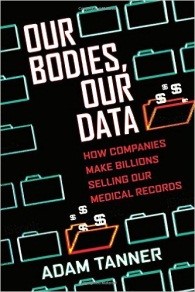 Our Bodies, Our Data
 The Domino Effect
 Malpractice
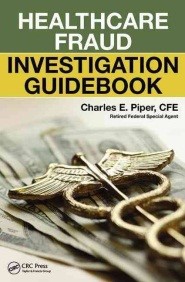 Healthcare Fraud: Investigation Guidebook
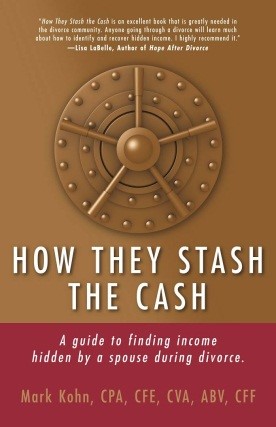 How They Stash the Cash
 Breaking Rockefeller
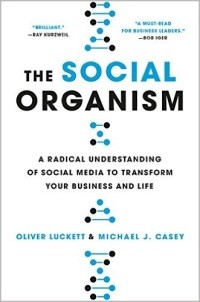 The Social Organism